Running Effective Community Board Meetings
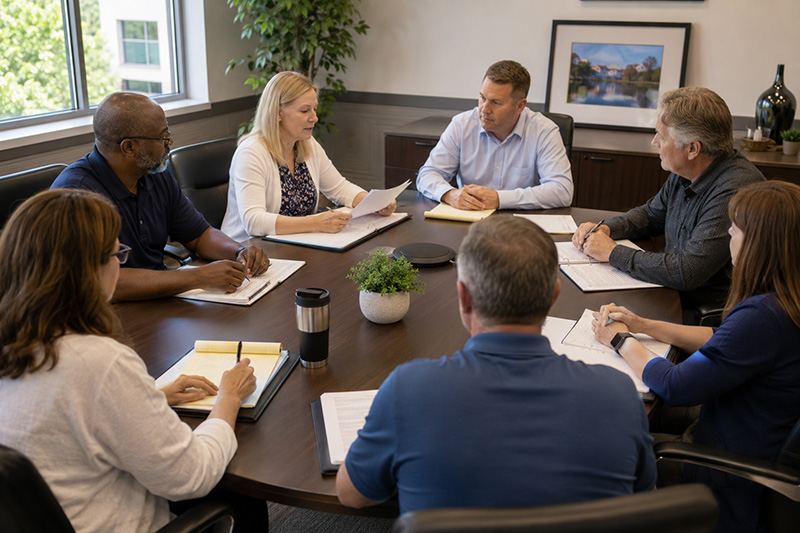
Board meetings are where many of the important decisions affecting a condominium or homeowners association are made. Budgets are reviewed, maintenance projects are considered, contracts are approved, owner concerns are addressed, and the Board establishes direction for management.
A productive meeting, however, requires more than simply getting everyone in the same room.
At Washington Properties, Inc. (WPI), we work with Boards of Directors throughout southeastern Wisconsin and have found that the most effective meetings have three things in common: preparation, organization, and a clear understanding of everyone's role.
Here are some practices that can help your Board conduct more productive meetings.
1. Start with a Clear Agenda
A well-organized agenda provides the structure for the meeting and helps keep discussion focused on Association business.
Depending on the Association, an agenda may include:
- Call to Order
- Confirmation of Quorum
- Approval of Prior Meeting Minutes
- Financial Report
- Management Report
- Committee Reports
- Old Business
- New Business
- Owner Open Forum
- Executive Session, when appropriate
- Adjournment
Board members should review the agenda and supporting materials before the meeting.
If proposals, financial reports, correspondence, or other information have been provided in advance, the meeting should not have to begin with everyone reading those materials for the first time.
Preparation allows the Board to spend its meeting time discussing and deciding—not simply reviewing information that was already available.
2. Know Your Quorum Requirement
Before conducting Association business, the Board should confirm that the number of directors required under the governing documents is present. Quorum requirements can differ between Associations, so Board members should not assume the requirement is the same as another community. The meeting minutes should reflect that quorum was established.
If quorum is lost during the meeting because directors leave, the Board should also be mindful of whether it still has the authority to continue conducting business or taking votes.
3. Understand Your Governing Documents
Board members have an obligation to understand the documents governing their Association. This includes knowing the hierarchy and purpose of the Association's Declaration, Articles of Incorporation, Bylaws, Rules and Regulations, and applicable policies.
Before making a decision, the Board should understand whether the governing documents:
- Give the Board authority to take the proposed action
- Require owner approval
- Establish a specific procedure
- Assign responsibility to the Association or individual owners
- Require a particular vote or approval threshold
A Board decision should not be based solely on “this is how we've always done it.” Past practice does not necessarily override the governing documents.
4. Use an Orderly Process for Motions and Voting
Board meetings should follow an organized procedure for making decisions. When action is required, a director should make a clear motion. Another director seconds the motion, the Board discusses it, and the presiding officer calls for a vote. Motions should be specific enough that someone reviewing the minutes months or years later can understand what the Board authorized.
Instead of:
“Motion to approve the roof work.”
Consider:
“Motion to approve the proposal from ABC Roofing dated June 15, 2026, in the amount of $24,500 for replacement of the roof at Building 3.”
Clear motions protect the Association, the Board, and management by creating an understandable record of exactly what was authorized.
5. Keep Discussion Focused
Healthy discussion is part of good Board governance. Board members do not have to agree with one another, and different viewpoints can help a Board make better decisions. However, repeatedly discussing the same point after everyone's position is understood does not necessarily improve the decision.
The Board President or meeting chair should keep discussion focused on the motion or agenda item being considered and move the meeting forward when appropriate. Issues that require additional research can be tabled or deferred until the necessary information is available.
6. Establish a Clear Owner Open Forum
Providing owners with an opportunity to address the Board can be an important part of Association communication. The Board should establish reasonable procedures for the open forum so that owners have an opportunity to be heard without allowing one issue or individual to consume the entire meeting.
Depending on the Association, procedures may include:
- A set amount of time for each owner
- Requiring the owner to state their name and unit
- Limiting comments to Association-related matters
- Requiring specific maintenance or owner requests to be submitted in writing
- Allowing the Board to take a matter under advisement rather than responding immediately
An owner forum is an opportunity for owners to provide information to the Board. It does not necessarily require the Board to debate, resolve, or vote on every issue raised that evening.
7. Understand the Difference Between Board Decisions and Management Responsibilities
The Board of Directors governs the Association. The management company carries out the Board's authorized direction and handles the day-to-day administrative responsibilities established by the management agreement.
WPI can gather proposals, provide information, coordinate contractors, prepare financial reports, communicate with owners, and help the Board understand the issues before it.
The Board makes the decisions that are within the Board's authority. Clear direction from the Board allows management to act efficiently. If the Board leaves a meeting without deciding what it wants management to do, the matter often remains unresolved until additional direction is provided.
8. Use Executive Session Appropriately
Certain sensitive matters may be more appropriately discussed outside of the general owner portion of a meeting, depending upon the Association's governing documents and applicable law.
These may include matters involving:
- Delinquent owner accounts
- Legal matters or communications with Association counsel
- Individual owner violations
- Personnel matters
- Other confidential or sensitive Association business
Boards should be careful not to use executive session simply because a topic is uncomfortable. Confidential sessions should have a legitimate Association purpose.
9. Keep Accurate Meeting Minutes
Meeting minutes are the official record of the Board's actions. They are not a transcript of everything everyone said.
Minutes should generally document:
- Date, time, and location of the meeting
- Directors present
- Confirmation of quorum
- Motions made
- Results of votes
- Significant Board actions or directives
- Time of adjournment
Minutes should focus on what the Board did, not recreate the entire discussion that led to the decision. Including unnecessary opinions, arguments, or detailed commentary can create confusion later and may expose information that did not need to become part of the Association's permanent record.
10. Leave the Meeting with Clear Direction
Before the meeting ends, everyone should understand what happens next.
- If the Board approved a contractor proposal, who will notify the contractor?
- If additional information is needed, who is responsible for obtaining it?
- If management was directed to send an owner communication, what exactly did the Board authorize?
- If an issue was deferred, when will it return to the agenda?
Clear direction prevents the same discussion from starting over at the next meeting.
Productive Meetings Lead to Better Association Governance
Serving on a condominium or HOA Board is a significant responsibility. Directors are making decisions involving other owners' property, Association finances, and the long-term condition of the community. The most effective Boards come to meetings prepared, understand their governing documents, allow productive discussion, make clear decisions, and then allow management to carry out the Board's direction.
Washington Properties, Inc. works with each Board to provide the information, financial reporting, contractor coordination, and administrative support necessary to help directors make informed decisions.
Washington Properties, Inc.
Professional Community Association Management